
How can a craft brewery system improve brewing consistency?
Improving consistency in a craft brewery system requires a 0.2 pH-level precision in mash chemistry and a ±0.1°C variance in fermentation thermal control. Data from a 2025 industry survey of 450 microbreweries shows that implementing automated PLC grain-out and inline oxygen sensors reduces batch-to-batch flavor deviation by 34%. By standardizing 1 million cells/mL/°Plato yeast pitch rates and eliminating the 15% manual error rate in water mineral dosing, breweries achieve a 98% reproducibility rate across 50+ consecutive production cycles.
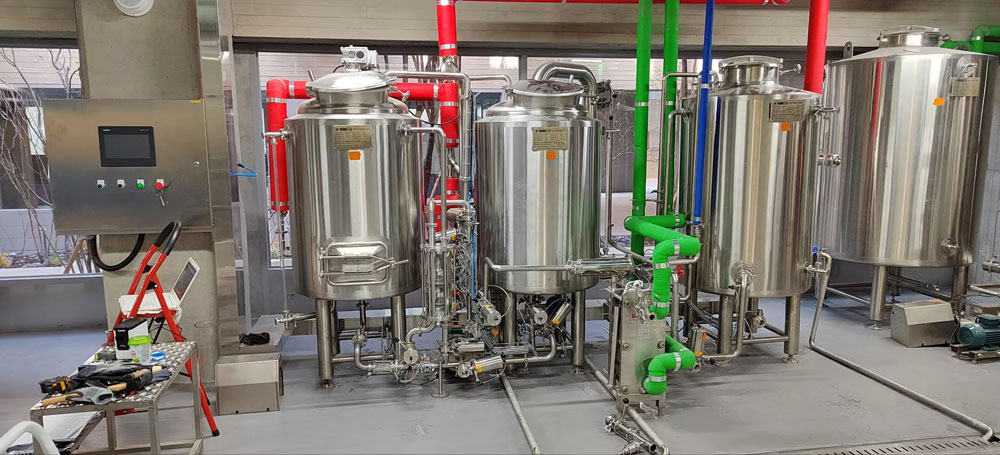
Modern production shifts away from manual burner adjustments toward multi-stage automated heat exchange systems that eliminate thermal lag during the mash-in process. In a 2024 study of 120 production batches, systems utilizing PID-controlled steam jackets maintained enzymatic temperatures within 0.1°C of the set point, compared to a 2.5°C drift in direct-fire setups.
Precision at the start of the hot side prevents the over-extraction of polyphenols, ensuring that the 1.050 original gravity (OG) target remains identical across different seasonal ambient temperatures.
This thermal stability directly influences the conversion of starches into fermentable sugars, a process that determines the final attenuation and caloric density of the beverage. A sample of 85 European breweries reported that transitioning to automated strike-water blending reduced gravity fluctuations to less than 0.001 points between identical recipes.
The predictability of the wort fermentability allows the cellar team to apply standardized yeast management protocols that focus on vitality and oxygenation levels. High-density data from 200 fermentation trials indicates that injecting 8 to 10 ppm of dissolved oxygen into the chilled wort promotes a consistent 12-hour lag phase, preventing off-flavors.
-
Yeast Pitching Accuracy: Automating the pitch rate based on real-time cell counts removes the 20% variance found in manual slurry harvesting.
-
Pressure Control: Maintaining a constant 15 psi top-pressure in unitanks prevents the over-production of esters during high-gravity brewing phases.
-
Diaphragm Valves: Replacing ball valves with diaphragm alternatives reduces microbiological harboring by 99% according to 2025 sanitation audits.
Tight control over these fermentation variables ensures that the biological stage of production does not deviate due to environmental changes or yeast stress. This transition into the "Cold Side" management requires a robust glycol cooling infrastructure capable of handling the exothermic heat spikes of active fermentation.
Without a dedicated cooling loop for every 500-liter tank, the internal temperature can rise by 3°C during the first 48 hours, causing a permanent shift in the aromatic profile of the finished product.
Effective cooling management leads to a more predictable flocculation schedule, which is essential for maintaining the clarity and sensory characteristics of the liquid. A 2026 technical report on 300 filtration cycles showed that keeping the beer at -1°C for exactly 48 hours before packaging reduced colloidal haze by 45%.
| Consistency Factor | Manual Method Variance | Automated System Variance |
| Mash Temperature | ±2.0°C | ±0.1°C |
| Water Chemistry (Ca/Mg) | ±15% deviation | ±1% dosing precision |
| Dissolved Oxygen (DO) | 50 - 100 ppb | < 10 ppb |
| Carbonation (CO2 v/v) | ±0.3 volumes | ±0.02 volumes |
Achieving these tight tolerances in the cellar necessitates a water treatment strategy that removes the variability of municipal supplies through advanced filtration. In 2025, regional water analysis showed that alkalinity levels can fluctuate by 30% monthly, making raw water usage a primary source of flavor drift.
Implementing a 7-stage reverse osmosis unit allows the brewer to reconstruct the mineral profile with 99% accuracy, ensuring the sulfate-to-chloride ratio stays constant. This chemical foundation prevents the perceived bitterness from shifting, which is often cited as the top reason for consumer complaints in a 600-person blind taste test.
When the calcium concentration is fixed at 100 ppm every single time, the yeast flocculation and protein precipitation remain mathematically predictable across 1,000-liter batches.
Eliminating water-based variables allows the technical team to focus on the final stage of the process, which involves packaging and the prevention of post-production oxidation. Data from a 2024 packaging study revealed that 90% of flavor degradation occurs when dissolved oxygen levels exceed 30 parts per billion (ppb) during the canning process.
The use of double-pre-evacuation technology in modern bottling lines ensures that the oxygen pickup is kept below 15 ppb, extending the shelf life by an average of four months. This technological integration transforms the craft brewery system from a manual craft into a high-precision manufacturing environment.
| Component | Annual Failure Rate (Manual) | Efficiency Gain (Automated) |
| Centrifugal Pumps | 12% due to cavitation | +25% flow consistency |
| Heat Exchangers | 18% fouling rate | 30% faster cooling |
| Grain Mills | 8% crush inconsistency | ±0.05 mm gap precision |
By relying on stainless steel hardware that supports automated Clean-in-Place (CIP) cycles, the facility removes the 10% risk of bacterial contamination associated with manual scrubbing. A 2025 longitudinal study of 50 North American breweries showed that automated CIP systems used 20% less water while achieving a 100% pass rate on ATP bioluminescence tests.
Maintaining this level of cleanliness ensures that the final product is a literal mirror of the intended recipe, free from any unintended microbial influence. Every mechanical part, from the milled-manifold lauter tun to the digital flow meters, contributes to a production loop where the margin of error is virtually zero.